As you may already know, I like audio books just as much as the regular old printed versions. And you may also know that I am pretty thrifty (some may some cheap, how dare they) with money. I once had an Audible account, but found that I had credits accumulating (back when accounts were credit-based) and I didn’t have the time to listen with my steady stream of podcasts. I cancelled the Audible account a few years ago to save a few bucks, but still enjoy having an audio book to listen to, especially on dog walks or long car rides.
After s ome research I discovered my local library’s digital audio and e-book program. The county library here is hooked up to two different on-line library sources (Libby and Palace), which means I can check out an audio book, listen to it on my phone, then the book gets removed from my account when it’s due. I don’t have to remember to return anything,and I can borrow countless books; it’s a win-win (the marvels of technology!).
The downside is that I don’t get to listen to any book I want. Extremely popular or new books usually have wait lists and long hold times. There are also quite a few books they don’t carry in their “stacks.” The upside to this, however, is that I’m often forced to find a book on a new topic or a different author that I normally wouldn’t pick out. That being said, I’ve picked a few duds over the years, but all I have to do is press “Return book” and it goes back to its virtual shelf. The vast majority of books I’ve chosen from the “Available Now” column have been really great reads, some I never would have considered checking out.
Here are a few of both non-fiction and fiction that I’ve enjoyed over time and that you might too:
Non-fiction
Think Like a Monk by Jay Shetty. This guy is definitely having a moment right now and good for him! Shetty’s story is interesting because he was a regular old Brit just starting his career but decided that the corporate grind was not for him, so he went to India and became a Buddhist monk. He realized along the way that he could help people more by telling them about his experiences and skills he learned by living a monk’s life. His story and tips are worth the read (or listen).
Educated by Tara Westover. This fascinating account and memoir is about the author growing up in rural Idaho with her doomsday-prepping family of devout Mormons. Her parents did not believe in the establishment or traditional education, but Westover perseveres to educate herself and live beyond the confines of her small world. Her stories are incredible and heart-breaking at times while also causing you to think about the effects our families have on us, long-term, and the choices we must make because of that.
American Prometheus: The Triumph and Tragedy of J. Robert Oppenheimer by Kai Bird and Martin J. Sherwin. We all know that Oppenheimer’s story has been a popular subject lately with the release of the film. I decided to listen to the biography first and then watch the movie (which I still need to do). This audio book is twenty-seven hours long! It felt like a part-time job listening to it, but I finished it and I’m glad I did. Oppenheimer’s life and story is interesting and profound. The quest of science in the larger scheme of war and the fallout from that is serious food for thought. If you’re driving across the country and have twenty-seven hours to kill, this one will keep you occupied.
101 Essays That Will Change the Way You Think by Brianna Weist. Most books that have some type of claim in the title turn me off, but this one ended up being a definite winner. Wiest’s essays are short but succinct, and really do make you change the way you think! Some include choosing purpose over passion, embracing negative thinking, and why so many of us can’t attain happiness. I bought this in paper form after I listened to it so I can re-read an essay from time to time.
Fiction
The Book Woman of Troublesome Creek by Kim Michele Richardson. This historical fiction is set during the 1930’s in Kentucky after the New Deal. Women (who did not have many job prospects at the time) were hired to deliver library books via horseback to rural folks who could not access a library. The story features the blue-skinned people of Kentucky (an actual medical phenomena) and what one woman who is a “Blue” has to endure as a traveling librarian in the mountains of Appalachia with prejudice, fear, and sometimes unexpected kindness.
Sharp Objects by Gillian Flynn. This novel is by the same author of Gone Girl (which I did not read). Thriller/suspense is typically not my preferred genre. The story and plot of Sharp Objects is pretty disturbing and bizarre overall, but if you want a book that will keep the pages turning, or audio rolling, this fits the bill.
The Liar’s Dictionary by Eley Williams. Part of the reason this novel interested me is because the author carries out two stories in different centuries about an infamous dictionary that is central to the plot. It was a weird, funny, and different kind of novel. It also satisfied the word nerd in me.
 Skip good old Amazon and go to your library’s website to see what kind of audio and e-books programs they offer. It opens up a whole new world of print and audio. And the best part, it’s FREE!
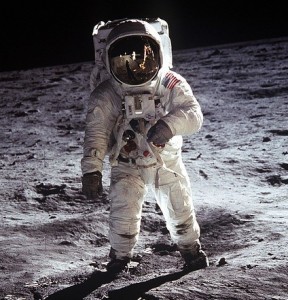 ambitious and innovative project, as well as a home run that is characterized by its height (really never heard that one).
 would certainly have by the third with a failed eye exam and no way to fix it, but he didn’t. He says that even you are rejected multiple times and your dream seems like it will never happen, do not give up. To Massamino, not trying is the real failure.
 en. Looking in one direction, he saw complete darkness, and in the other, the ball of fire that is the sun. From that experience, he said that he’s “checked out the neighborhood, and there is nothing around, it is only our planet.”



 that each hemisphere does have a particular focus, but that creative people are more “right-brained” and “left brained” are more logical is not true. Stating a study that involved reviewing over a thousand MRI brain scans, it was determined there is no greater strength of each hemisphere per individual. Dr. Jandial’s sums it up, “In other words, math geeks and computer programmers use both sides of their brain equally, as do painters and poets.”
 desires is a sure way to discover your inner creative self.” Science backs this up by again studying MRI scans that show connections between different areas of the brain when engaging in day dreaming. He says that creativity requires “a balance between homing in and spacing out, between mastering material and going off on a tangent.” So, go ahead and stare off into space. It’s good for you!
 mes and free play allow kids to explore all kinds of different worlds and ideas that they wouldn’t necessarily discover while staring at a tablet or going to a structured karate class. And adults can benefit too. Play (in however you define it) allows a freedom that we don’t experience while blindly watching TV or continuously checking email.
 greater things.”
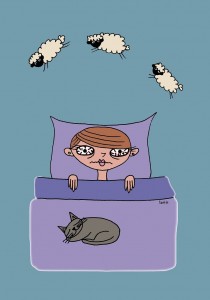 darn elusive thing that only gets more challenging as we age; how do we get enough of it, especially when it evades us at 3AM? This is a question I’ve been pondering between two and five in the morning for the last few years. The frustration, exhaustion, and anger I’ve felt from time to time during my bouts of insomnia have almost sent me over the edge.
 often need less than we think: “Sleep is similar to food in that our body also needs a core amount of food to function. Most individuals, however, eat more than their core requirements to feel good.” I can honestly say that I do not feel good with only five and a half hours of sleep, but at least I know now that I can get through the day (although with probable “mood impairment,” he notes).
 ly have not solved my insomnia problem entirely, but his book taught me a few things I did not know about sleep and how I can help myself when I can’t get it. It is certainly a work in progress for me, but I do feel better off than I did a few months ago. If only I could sleep like my son who literally closes his eyes and stays asleep all night, almost nothing wakes him, and he comes downstairs in the mornings refreshed and energized.
 bring a smile or a tear in remembrance, but they can’t stand in for anything more than that. (It was more comforting to have a favorite picture of her around than a beloved China set anyway.)
 These days, I try to think of and point out the funny little quirks my mom had (and she had quite a few). It makes me feel like she still lives on in some way. My kids know her silly sayings and sometimes goofy mannerisms. My brother, husband, and I will bring them up when we notice something that reminds us of her. It helps. We know she won’t be coming back, and I honestly would not want her to be back in the same situation, but each day I can remember the things about her that make me smile. And on the days when it feels too hard, I know that they will eventually pass. She is gone but not forgotten. Miss you, Ma.
 That title is a little misleading, I’ll admit, but during my latest library book reading journey (yes, a library book, my dentist acted like I was holding an ancient artifact – “is that a…library book?” he asked) – excuse that digression – I came across Mel Robbins and her 5 Second Rule (The 5 Second Rule: Transform your Life, Work, and Confidence with Everyday Courage). In a nutshell, she claims that whatever your goals are, your fear to act, your anxiety, all can be helped by the 5 Second Rule. (And it has nothing to do with the rule of eating something off the floor within five seconds.)
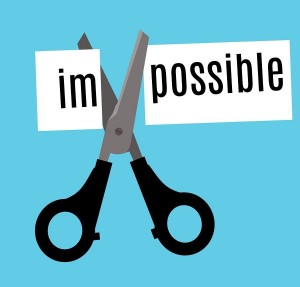 afraid of flying for most of her life, but realized that if she applied the Rule once an anxious thought entered, then physically moved her body to interrupt her brain, along with picturing an “anchoring thought,” a future scene she was looking forward to (for example, flying home to her family and picturing them all eating dinner together once she got back), she was able to beat this overwhelming fear. She says she doesn’t even think about her flying worries anymore. “Everyday life is full of moments that are scary, uncertain, and difficult. Facing these moments and unlocking the opportunity, magic, and joy in your life requires tremendous courage.” For her, the 5 Second Rule forced her to face those moments and in doing so, found herself being courageous. “The more that you practice acts of courage, the more that you will believe you are in control of your life, and as a result, the more confident that you will become. Even when what you need to do scares you to death, the Rule helps you take courageous action.”
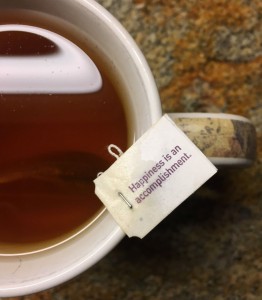 What job would make me happy? What material item could do it? How much more money do I need to reach that place and stay there?
 promised land to arrive at after fighting through the long journey, instead we create or experience the happy moments day in and day out, and be grateful for each of them. (In the words of the Mandalorian, “This is the way.”)
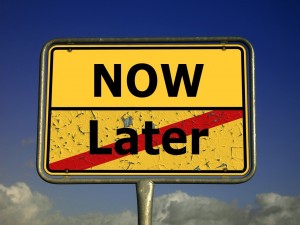 who are parents, how many times do you ask your kid to pick up his shoes that cover the floor only for the disinterested child to grunt, “I’ll do it later.”
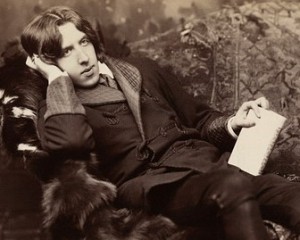 Good luck to all of us procrastinators out there. As Oscar Wilde said, “I never put off till tomorrow what I can possibly do – the day after.”
 challenge, set the goal, succeeded, then felt a little empty after, or possibly disappointed, because “now what?”
 own obstacles. Sometimes thinking about other people and their bigger problems makes me feel petty and small about my own (i.e. my “first world” problems). But, good or bad, we all have issues; that is the nature of life. And maybe if we focus on the perspective that other people have faced problems, similar or even worse, and they got through them, we can too. It might just be the little lift we need to feel better or keep going.