Procrastinate – who doesn’t do it? (Well, there are a few absolute “self-starters” out in the world and they’re annoying.) Almost all of us procrastinate in one way or another; some of us do it for nearly everything, some do it for a few things. The impetus of this blog post actually came from my procrastination to write one! (As well as the lack of ideas) And for those  who are parents, how many times do you ask your kid to pick up his shoes that cover the floor only for the disinterested child to grunt, “I’ll do it later.”
Any human at almost any age will procrastinate and it’s hard to break out of the mindset, especially when it’s ingrained (because who voluntarily jumps up to do weekly chores), but for those who have an extremely difficult time completing a task or a project, there are theories and ideas out there to help.
After a discussion between moms expressing their discontent about kids not doing homework, my friend sent out a video from her educational resources regarding procrastination (thank you, Julie P).
The gist of the video is that procrastinators are not lazy, instead they are avoiding a task because of the negative feelings that come up (I know, this could be debated, some certainly appear lazy). Here are some reasons why people procrastinate:
– They are disorganized and don’t schedule their tasks well (including their possessions), so it is hard to even think about getting started.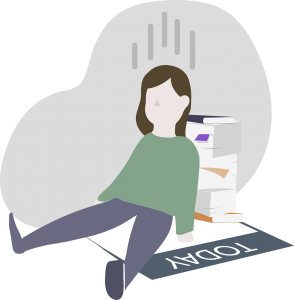
– They are overwhelmed by the enormity of a task or project. They see the big picture as too intimidating. Instead of breaking it down into small parts to accomplish one by one, they give up before they begin. (I’ve certainly reached a halfway point in an organization project only to feel hopeless and surrounded by too much stuff.)
– They are perfectionistic. The fear of failure looms large and they would rather not complete the task because they might do it imperfectly or receive criticism. (Been there many times.)
– They are distracted. They find other things to do or are intentionally distracted by other tasks because they don’t like the one they have to complete (aka most kids regarding homework, chores, calling grandma, anything that keeps them from what they want to be doing).
So, what’s the magic solution? Inserting a few microchips into the person’s brain and controlling them remotely, of course! (That really was a joke.) But since that will probably be frowned upon, the next suggestion if you’re procrastinating is to take “One Small Action.”
To do this, first, stop calling yourself lazy or unproductive. Acknowledge whatever feelings you have (boredom, frustration, fear) and accept that they are there. Apparently, we tend to procrastinate on the same things over and over. Notice what comes up when you think about doing a task, even if it’s, “I don’t feel like it.” And then…
Take one small action, not matter what it is, to begin the task or project. People who completed one small action were 66% successful in completing a task, versus those who attempted to simply change their feelings about it (33% successful). The idea is that completing one little thing leads to action which begets more action.
Most have heard the suggestion that to motivate yourself into exercising, simply put on your workout clothes or sneakers. Or get out the yoga mat and put it on the floor. Once it’s there, you might as well go ahead and do it. For kids, it might be getting out the homework and laying it out on the table, opening the laptop, or bringing up the assignment. The idea is not to plan anything out, just do one small step involved in the task.
This tactic typically works for me. If I start something, even in a tiny way, it might take some time, but I will complete it (like this blog post!), but kids can be tough. Needing “breaks” and never getting back to the task is common in my house. My suggestion would be setting timers and having some kind of reward for the completion of said task (that works for my own lack of desire to begin again).
Here is the full video (short and to the point) if you want to see it for yourself: Procrastination Video
 Good luck to all of us procrastinators out there. As Oscar Wilde said, “I never put off till tomorrow what I can possibly do – the day after.”
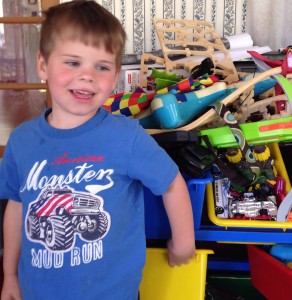
 As it turns out, the age group that should act the most “adult” – doesn’t. Surprised? Recently, I was listening to a younger podcaster interviewing an even younger food blogger (both considered Instagram “influencers”). They agreed that, when receiving comments/feedback from their posts, TikTok users are the least mean, IG is second, and Facebook and Twitter have the meanest and nastiest commenters. Who typically has accounts to these two outlets? ADULTS. Come on, FB and Twitter adults, grow up and be mature (or maybe that’s not a thing anymore).
 90% of them. The other countries are China, France, U.K, Pakistan, India, Israel, and North Korea (that’s in order of the most to the fewest). The more startling fact is that scientists think it would only take about 100 of these nukes to make life on Earth unsustainable (due to air quality, lack of sunlight to grow food, etc). That’s it, 100! And yet, being the ridiculous Earthlings that we are, we have 12,900 more than necessary. Surprising and yet not surprising, no? Let’s hope they stay un-detonated.
 If you had any fun and exciting travel plans this summer, or camps or sports for your kids, you’re probably starting to get the feeling that they’re not going to happen. Just like the spring when, one by one, event after event got nixed, so is the summer. Yes, places are slowly attempting to re-open, but they do so while maintaining difficult, and sometimes impossible, restrictions on the number of people allowed, adequate spacing, and many mask and glove requirements. So even if some of these plans did go forward, they sure wouldn’t be much fun.
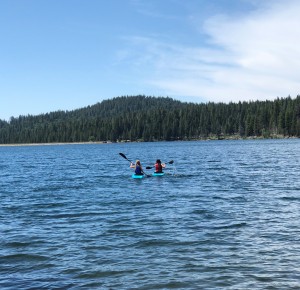 What that might look like, I still don’t have a clear picture of yet, but I told my daughter that we will be visiting lots of places with water in lieu of a pool (and thankfully, we can do that where we live in the middle of nowhere). For those of you who had that great trip planned, the disappointment and the pain of getting refunded is probably extreme, and I am sorry about that. No one wants to continue this way. But, can we find ways to make the best of it? We can wait (which many of us have a hard time doing) until it’s safer to go on that trip (because it really wouldn’t be much fun right now anyway). In the grand scheme of things, so far, we have had two seasons of one year altered from the way we expect them. That’s six months out of the many years that we live. Yes, we can get through it, children and adults too.
 California anyway). We’re starting week three of shelter in place, only going out for food or necessities, and for my family, homeschooling. These are trying times, indeed. By Friday, school is out and we need that break – from each other. Despite the inconveniences, and hardships for many who aren’t working right now, we can try to find the good, even if we don’t really feel like it (and I can tell you that no one in Target yesterday felt like it, not even a smile could be had). Here they are anyway:
 do most of the time we’ve found). So, even if you don’t own a dog, know that those who do are happier and that’s good (as we know, cats could care less).
 our view for the better. Feeling stuck gets me anxious, frustrated, and clawing at the cage to get out. Feeling safe gives relief and calm. I’m reminding myself of this often.
 g, and if a movie feels too long then just go for a walk together. Re-connecting by spending alone time with your spouse or partner will improve your relationship, re-establish intimacy, and reinforce the foundation of this family you created together. (You’re both worth it!)
 rawler then walker then a toddler to a kindergartner and so it goes. It probably feels like light-years away, but it’s not. So when the times are really tough (and having an infant is hard even with an “easy baby”), know that this is all temporary. It will change – you will get to sleep normally again, your world won’t always be consumed by baby concerns, and then once you get used to it, the march of time will slowly transform things yet again. This is good news (to me). Just remember to savor those wonderful moments and breathe through the hard ones!
 In my ripe old age of somewhere in my fourth decade, I’ve come across three phrases that can make a world of difference when dealing with your children, friends, family, argumentative adults, anyone. Lately, I’ve noticed the lack of these phrases coming from people of power (or those who think they have power), those who feel superior, or just people who feel owed (at any age). Regardless of who you are, consider these phrases and question when you last heard or said them. Here they are in no particular order:
 relieved. This applies to situations with your kids or in a meeting, just assume the blame if it truly is your fault, remedy the problem, and move on. I’ve been in multiple situations lately where the same person doesn’t ever accept fault or blame, but instead turns it around and puts it on someone else. That not only makes everyone upset (and infuriates me), it also reveals that this person cannot be trusted because who knows who will be wrongly blamed next? It could be you; it could be me. It also seems to say that this person never does anything wrong, and how is that possible? We’re human, we make mistakes, own up to it, learn, and keep going. It’s that simple.
 people like to be recognized for their work, and saying “thank you” (or even “thanks!”) is so easy. When my kids finally put their shoes away instead of kicking them off and leaving them on the floor, I say thank you. If someone goes out of his way and holds the door open, tells you that your gas cap is not screwed on, or whatever small token it might be, just say “thank you.” Express your gratitude for those big or small things and everyone wins.
 )
) -line, there is a price to pay for being able to see anyone you know on the Internet – our privacy. Our kids today have been born into a time in which pictures are constantly taken then uploaded for the world to see. In turn, they will do the same, and it’s not always the super cute pictures of them as babies with a sleeping kitten, they’re pictures that can be humiliating or shameful – pictures they wouldn’t want anyone seeing, and now almost anyone can. Wiseman points out, “When you were a teen, your most embarrassing and humiliating moments weren’t up for public discussion and entertainment….She’s living that moment in public. There’s no protection. There’s no privacy. This is her regular, ever-present reality. Your daughter is growing up with a different definition of what’s public and what’s private.”
 l when you were a kid and need that toy (I’m thinking Barbie again or He-Man in my brother’s case). This isn’t new either. But kids who play on-line, get free apps, or just use mom’s phone while in line at the grocery store, see double that, usually for other games (my eight-year-old son thinks he wants every game he sees advertised in other games). According to APA.org, “advertisers spend more than $12 billion per year to reach the youth market and that children view more than 40,000 commercials each year.” Think about all those opportunities for “I gotta have that,” “I need that,” “I’m not good enough or cool enough unless I get that.” It’s overwhelming! Again, if your tween is going to be a “normal” kid (and yes, he or she probably really wants to be) then an on-line world is inevitable – thus, so are the ads.
 e to know and what to do in a shooter situation is becoming more real and more of a possibility.
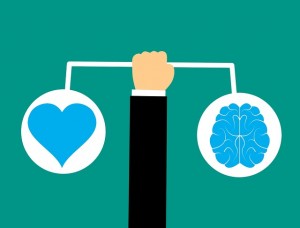 need a balance.
 r pregnancy books before I gave birth to my daughter. My husband and I took the classes on delivery (which I found scary instead of comforting). I went to the breastfeeding class. I talked to mothers with both young and older children. Few, if any, of these sources could prepare me for the life transformation that a baby actually brings. What was more frustrating was that no one warned me that this was a complete life change. Having babies and entering motherhood is so commonplace in our society that few people stop to think about how our lives are transformed by a baby. One reason for this might be that the women who have experienced motherhood, like grandmothers or mothers with grown children, quickly forget what it was like that first year. In the time span of your child’s life there is so much that will happen, from his first steps across the living room floor to his stride across the stage at high school graduation, it is easy to forget what that first year was like. There are also those moms who blend into motherhood so easily that it appears they do not have the same experiences or feelings that many of us do. I am confident in my belief that these mothers are part of a very small minority, and even they have difficult times coping with the responsibilities of motherhood sometimes. There are some of us, too, who do not want to admit or accept this permanent change that happens in our lives. I wanted to have a baby, but I was afraid of the idea at the same time, and I did not want to believe that a baby would change me, my husband, or our marriage. My thoughts were: What if this is not what I expect? What will happen? I cannot go back…right?
  elf. The adjustment of just coming into the world must be overwhelming for a baby. He is nestled in a confined, warm, dark place listening to the steady sound of a heartbeat and other bodily noises. Then, probably without warning, muscles around him contract and he is pushed out into the world of bright lights, loud sounds, and a place that makes his body feel cold. Just learning what these new sensations are must be exhausting. (There is a reason we have no memory of our births, afterall; it is probably too traumatic for us.) So we care for him. We hold him, we love him, we offer him a breast or bottle, we try to make him as comfortable as possible in this new and strange world. But in the end, we really do not know what is going through his new and functioning mind. We do our best, but it might not be right. And if it isn’t, then we often hear about it, very loudly. It is extremely frustrating to make blind guesses and not know whether it is the correct answer. Yes, the crying may stop, but does that mean the problem is fixed? Maybe, temporarily, this time. Grasping this understanding that the right solution doesn’t always exist was extremely hard for me to take. Why can’t I plug in the correct number and get a solid answer? Because, I realized after many months, this little being is human and she possesses the complexities that all of us have: emotions, feelings, needs, and wants. And she is just now learning what all of these things are, and who exactly I am, that person who holds her, feeds her, and tries to console her. Sometimes she might have been crying to release all those emotions that she did not understand. In the end, I felt just as confused as she probably did.
 ried. I blamed it on an influx of hormones and exhaustion. My husband looked nervously in the rearview mirror, “Uh…are you okay?” he asked. I assured him that I was fine, but the tears needed to come out. I suppose it was just a release after a very long labor, and the actual realization that this baby was coming home with us, ready or not. Our lives had changed.